
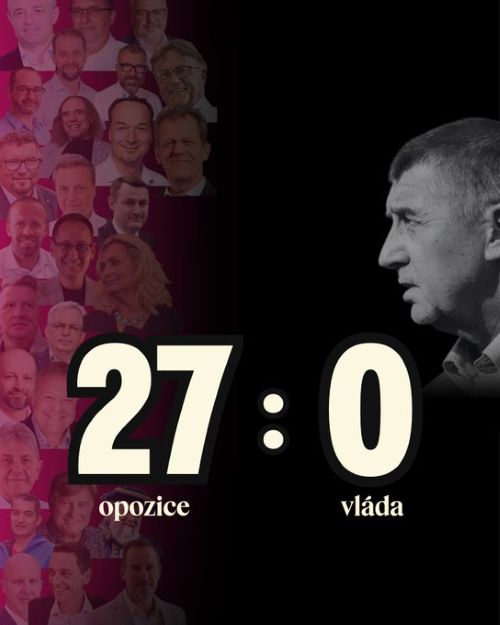
In the second round of the Senate elections, Prime Minister Andrej Babiš’s party, ANO (YES), won no seats. In contrast, the opposition parties, including the Mayors and Independents (STAN) and the Civic Democratic Party (ODS), achieved notable success, highlighting a significant electoral setback for Babiš’s far-right government, which came less than a year after his appointment.
Anticipating this outcome, the Czech Prime Minister told his supporters last week that “everyone will unite against us.” The first round of elections, held 9-10 October 2026, saw five candidates from four parties win over 50% of the vote in their constituencies and secure seats.
The Mayors and Independents, along with the Mayors for the Liberec Region, achieved a significant result in the Senate elections, electing ten of their fourteen candidates to the upper chamber of parliament, two of whom won in the first round. The ODS also performed well, winning seven Senate seats. Conversely, the Pirates party declined, as none of its nominated candidates gained representation in the Senate.
Voter turnout in the second round of the Senate elections reached a quarter of the electorate before the polling stations closed.
Opposition accuses PM of Czech Republic’s isolation
Andrej Babiš, prime minister from 2017 to 2021, formed a coalition government after the October 2025 elections with two far-right parties: Freedom and Direct Democracy (SPD) and Motorists for Themselves.
However, he didn’t take drastic measures to implement his policy; instead, he chose a step-by-step approach to erode the Czech Republic.
For example, he didn’t please his extremist partner SPD, a member of the extremist Europe of Sovereign Nations Group (ESN), which asked for the expulsion of most of the 380,000 Ukrainian refugees in the country.
Babiš’s foreign policy has shifted away from supporting Ukraine and has rejected several EU policies, winning a confidence vote in Parliament last January. Since then, his government has neglected the Czech Republic’s defence needs, cut defence spending in the budget, undermining the country’s defence capabilities and halted support for Ukraine.
In addition, the government.
MEP Alexandr Vondra, deputy chairman of the Civic Democratic Party (ODS), warned last February that the government could inflict damage on the Czech Republic’s defence capabilities. He criticised the government for using foreign policy as a tool for domestic political struggles, saying this rhetoric undermines the country’s international standing. He criticised Babiš’s decision not to guarantee economic aid to Ukraine, saying it aligned the Czech Republic with Hungary [of then-Prime Minister Viktor Orbán] and Slovakia in a shameful move.
In March, Pirates MP Ivan Bartoš revealed that the pro-Kremlin government was preparing a law on non-profit organisations, similar to a Russian model.
In June, a government initiative to restructure public broadcaster funding raised concerns about media independence and sparked widespread protests. The proposed plan would shift financing from fees to state budget funding, effective next year. Critics argue this could give the government greater control over the media, echoing tactics used by far-right regimes in Slovakia and Hungary.
Reactions after Senate elections defeat
“Andreji Babiši, this is another message from the voters and a total debacle for ANO. Your unfulfilled promises, blaming others, constant scandals, and shame simply aren’t enough. People aren’t living better, and they’ve had enough of your government!” posted on X MEP Danuše Nerudová from the STAN party.
ODS chairman Martin Kupka said before the vote count that he would consider it a success if the party retained five of its defending senators.
“The opposition clearly won; it showed that it can negotiate. The campaign is not over; it will last three years,” said KDU – ČSL chairman Jan Grolich at the celebration of the election victory.
The Senate election results indicate Czech citizens realise the harm the Babiš government inflicts on the country.
